|
|
|||||||||||||||||
|
|
|||||||||||||||||
|
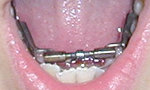
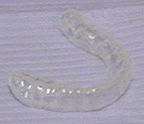
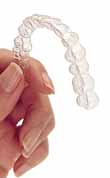
When describing orthodontics, most people just refer to braces. While the majority of orthodontic cases involve braces, there are alternatives that may be used for younger children or adults. Arch expanders for younger children can minimize or eliminate the need for braces when the problem is treated early enough. Invisible, clear plastic retainers, instead of braces, can be used by adults for mild to moderate crowding problems. What are the Benefits of Orthodontics?
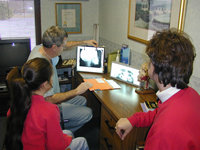
What is an Orthodontic Evaluation? Orthodontic treatment with braces begins with an evaluation appointment. Dr. Sweet will first visually determine if you are a good candidate for orthodontic treatment, or if another treatment would be more appropriate. If you are a good candidate for orthodontic treatment, Dr. Sweet will take impressions of your teeth, special x-rays of your jaw joint, head and teeth, and very important measurements of your teeth and mouth.
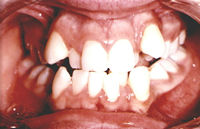
When should My Child be Evaluated? If your child develops
an "open bite", or you are
otherwise concerned about the development of your child's teeth, no matter
what the age, contact us right away for a consult with Dr. Sweet. Otherwise,
children should be evaluated by the age of 6 for orthodontic treatment. In
the past, a child was 11 or 12 before brackets were actually placed on the
teeth to straighten them. This may still hold true in most cases, but there
are new techniques that can correct problems early, while a child is still
growing. This may eliminate the need for braces in the future, or if the child
does still need braces, the treatment will be less complicated, usually shortening
the period of time in braces. What is an Arch Expander?
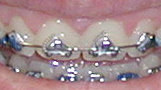
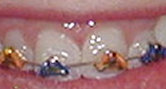
What are Braces? Braces are retainers, bonded brackets, arch wires and elastic bands that move crowded or spaced teeth into a "normal" position for appearance, prevention and function. Patients with poorly aligned teeth tend to have much more tooth decay, gum disease and jaw joint problems. Recently invented brackets and new techniques make orthodontic treatment faster and more comfortable than ever.
How do Braces work? Over a period of time, teeth will shift if constant, gentle pressure is applied. Brackets are bonded to the front surface of each tooth and wires are attached to the brackets with elastic bands. The slight tension on the wire is gently transferred to the bracket through the elastic band.
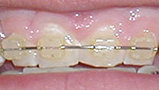
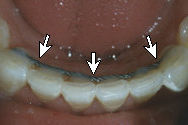
What are Retainers? Once the teeth have been moved into proper position, a retainer is sometimes used to keep the teeth in place until they have "settled". Retainers can be fixed (bonded to the teeth) or removable.
Are Braces Only for Kids? Adults are finding that having braces isn't kid stuff anymore. Many adults are turning to braces to correct problems with their bite. They recognize the benefits of reduced wear, reduced incidence of TMJ problems, and increased self-esteem. Major adjustments must be done with braces, but some adjustments can actually be done without braces! The Latest Trend in Orthodontics is No Braces at All!
Contact our office to find out how Invisalign® can improve your smile!
About
Us |
Meet the Staff | Cosmetic
Dentistry | Teeth Whitening | Orthodontics
© Copyright 2003- Dental WebSmith, Inc. and Robert L. Sweet, D.D.S., P.A. All rights reserved. Disclaimer: The information provided within is intended to help you better understand dental conditions and procedures. It is not meant to serve as delivery of medical or dental care. If you have specific questions or concerns, contact your health care provider.
|
|||||||||||||||||